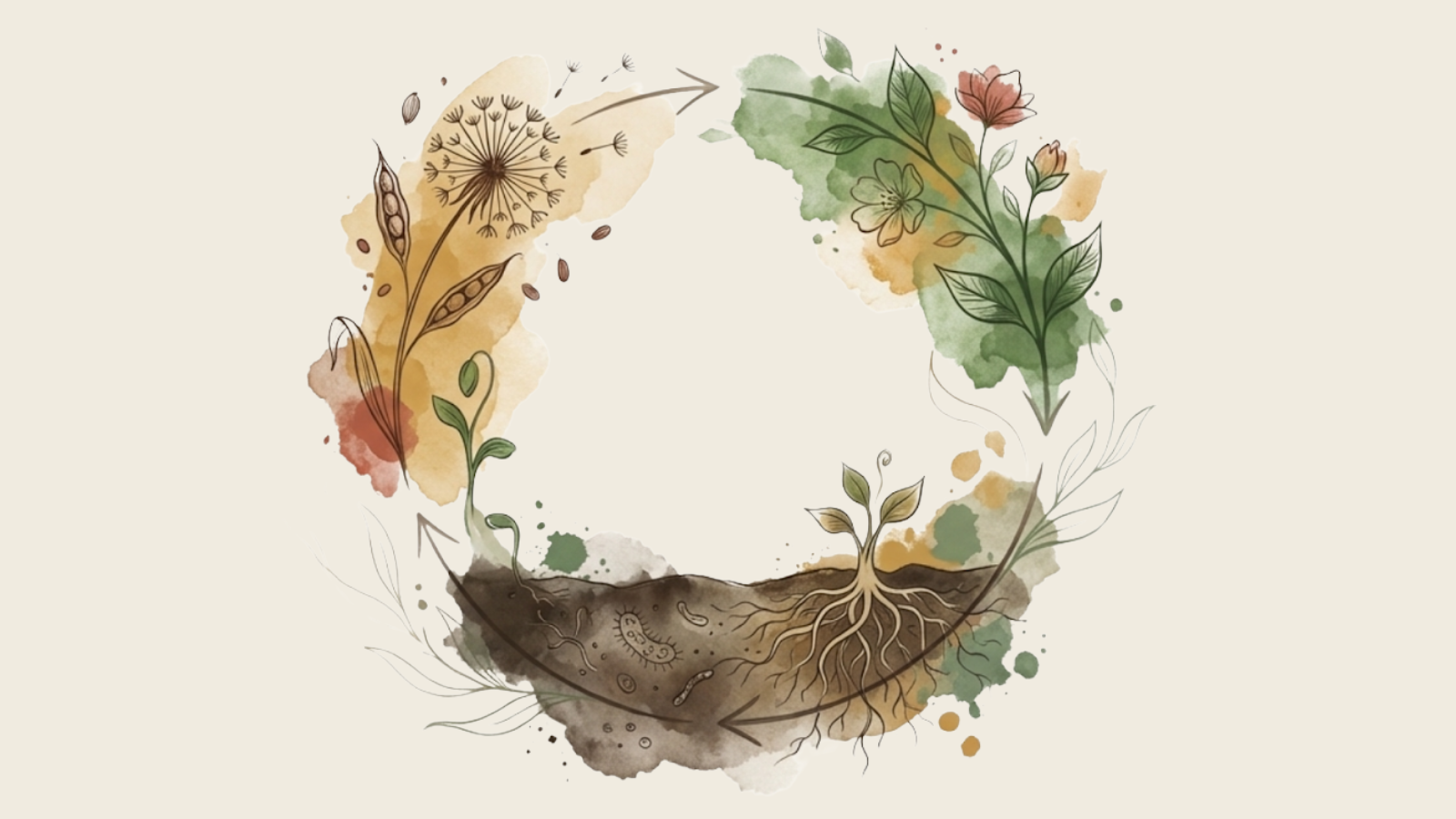
To foster social or environmental change today means navigating a gap between two realities.
One is the reality of reporting: the necessary demand for accountability, data-driven decision-making, and proof of impact. The other is the reality of the planet: a desperate call for regeneration, for working with complexity, and for acknowledging the interconnectedness of all life.
For too long, evaluation has forced us to choose between the two. Traditional evaluation often functions as an extractive exercise: mining data to feed upward reporting structures and counting the "fruits" of a project while ignoring the health of the "soil" that sustains them.
We believe it is time to bridge this gap.
Over the past 2.5 years, alongside an incredible community of practice, we have been exploring a different approach. What if evaluation was an intervention in itself? An intervention that, at its core, fosters wellbeing, addresses power imbalances and builds empathy?
Regenerative Evaluation is an evolving practice that embraces rigorous evidence while actively nourishing the systems it assesses. It holds two guiding questions simultaneously:
Today, we are thrilled to introduce the Regenerative Evaluation Living Paper.
We deliberately call it a "Living Paper" because we see it as a snapshot of an evolving practice, born from the dialogues, tensions, and collective inquiry of our Regenerative Evaluation Community of Practice.
Inside the paper, we bridge the gap between philosophy and fieldwork by outlining:
.png)
👉 Access the 3-page short version of the Living Paper.
This paper is an open invitation. Whether you are a program manager, a funder, an evaluator, or a community organizer, if you have been feeling the friction of traditional measurement, this space is for you.
👉 Watch the recording of the Living Paper launch and hear from the contributors.
👉 Access the full Regenerative Evaluation Living Paper.
👉 Join the Regenerative Evaluation Community of Practice.
👉 Join these upcoming events as part of our Regenerative Evaluation Dialogue Series:
👉 The Living Paper Roadshow: Want to introduce Regenerative Evaluation to your organization or network? Reach out to host a joint session.
👉We are seeking aligned funding partners. If you are a funder, or know foundations interested in supporting this paradigm shift, we would love to connect.