When we launched the Regenerative Evaluation Living Paper back in March, we approached it as an open invitation into a shared inquiry: how measurement itself can actively serve the health and wellbeing of all. At the heart of it are the 9 guiding principles for Regenerative Evaluation.
The response since then has been deeply humbling. Over 250 practitioners, researchers, and network leaders have stepped into this space, translating resources and exploring new approaches across their ecosystems. Yet, as our Community of Practice has grown, a persistent tension keeps surfacing in our dialogues: What happens when these living principles touch the messy reality of daily practice?
.png)
It is easy to align with a principle when it lives on a clean PDF. But the moment it touches an active project, things start to change. We find ourselves sitting in rooms with risk-averse boards, navigating rigid funder deadlines, and grappling with the subtle power dynamics that threaten to reduce community participation to a polite compliance box. Traditional evaluation often deals with this friction by polishing the narrative after the fact—smoothing over the awkward pivots, hiding the messy experiments, and pretending the journey was linear all along.
If we want measurement to become a generative ally rather than an extractive tax, we have to stop hiding the pivots. We don't need more idealized, textbook success stories; we need space to practice out loud.
This autumn, we are opening up space for this exact inquiry through a 5-week public event series: Experiments in Regenerative Evaluation.
We are bringing together practitioners and co-hosts from across global evaluation networks to look closely at active, real-world projects. Across four 90-minute online sessions, we will dive into live inquiries around power dynamics, community co-ownership, financial governance, and future foresight. Each session is structured around experience sharing followed by joint sense-making and dialogue, featuring a 60-minute soft exit so you can participate even if your schedule only allows for an hour.
.png)
Exploring power vacuums vs. relational safety, and how evaluators mediate funder and board tensions.
Co-Hosts: Claire Sivier (TIALT), Rory Crawford (Nature Towns & Cities), Jannik Kaiser (Unity Effect)
Date & Time: October 22, 2026 @ 3:00 PM CET
.png)
Moving from late-stage consultation to true co-ownership across the entire evaluation lifecycle.
Co-Hosts: Bhargavi Thakur (Independent Consultant), Jannik Kaiser (Unity Effect)
Date & Time: October 29, 2026 @ 3:30 PM CET
.png)
Integrating future foresight methods, cultivating practitioner capacities, and steering the future of MEL.
Co-Hosts: Mylène Pacot & Andrea Esteve Pedró (Co-Researchers, Sensing What Is Emerging Collective Learning Lab), Jannik Kaiser (Unity Effect)
Date & Time: November 3, 2026 @ 4:00 PM CET
.png)
Tracking how inner capacities reshape leadership practice, and the mixed-methods design that makes intangible relational shifts credible.
Co-Hosts: Carri Munn & Nono Sekhoto (Circle Generation), Jannik Kaiser (Unity Effect)
Date & Time: November 12, 2026 @ 4:00 PM CET
Testing Relational, Regenerative, and Future-First evaluation methods on live cases, alongside a peer cohort of evaluators, MEL practitioners, and curious learners. Two online sessions bookend seven weeks of applied experimentation, held by weekly reflection prompts, buddy pods, and a light-touch Signal Tracker.
Co-Hosts: Malaika Cheney-Coker (Ignited World), Dr. Tim Strasser, Jannik Kaiser (Unity Effect), Fito Network
Date & Time (Session 1): October 15, 2026 @ 4:00 PM CET
Date & Time (Session 2): December 3, 2026 @ 4:00 PM CET
Throughout this series, we also want to experiment with how we harvest collective insights. A core part of our work is making qualitative, narrative, and contextual data strategically relevant—demonstrating that stories, lived tensions, and subtle shifts are just as rigorous and actionable as numerical metrics.
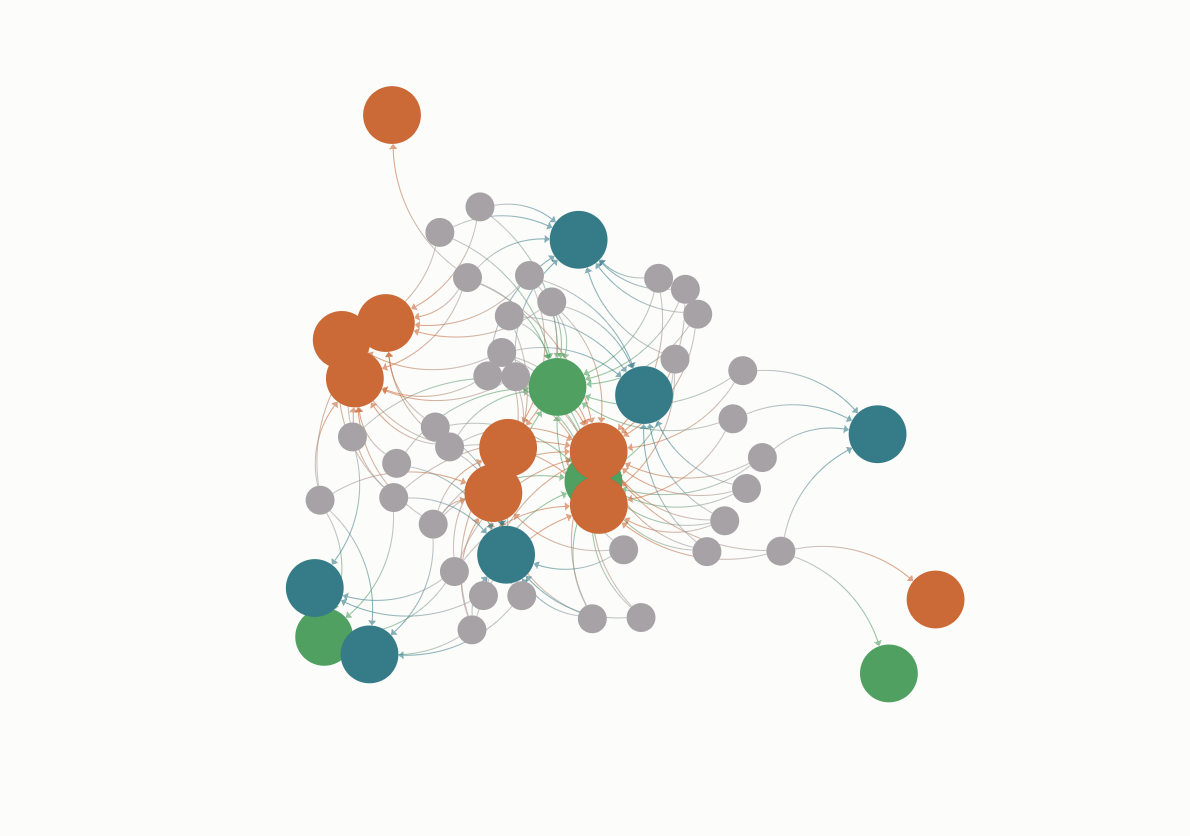
To support this shared inquiry, we are introducing a Signal Tracker alongside the event series. Throughout the series, participants will be invited to log brief reflections, insights, emergent tensions, and real-world experiments as they happen. Together, we will cultivate a living, visual map of signals, allowing us to sense the emergent patterns across our global ecosystem in real time.
Whether you drop into a single session, log a field note in the Signal Tracker, or dive into the ongoing community, there are three distinct ways to engage:
We look forward to stepping into the messy middle and practicing out loud together.